by Joe Eaton
(Full article from RATS Tales June 2026)
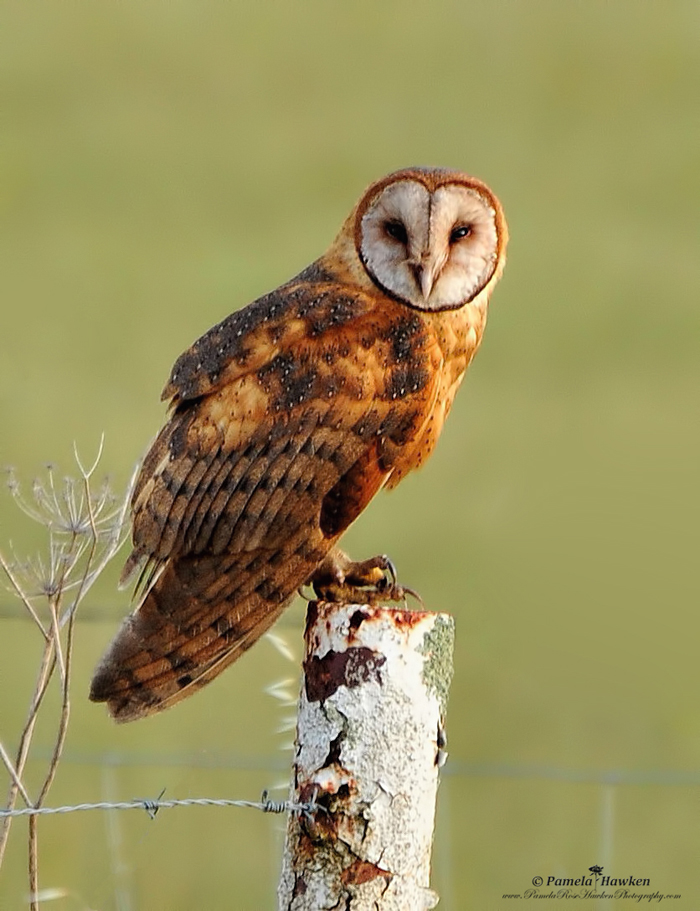
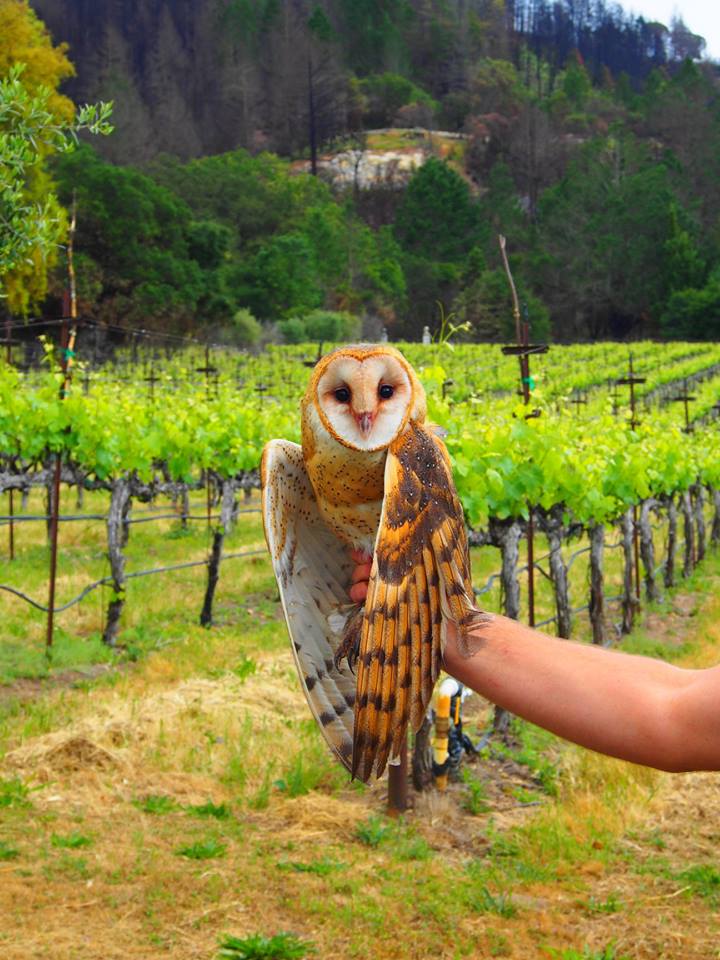
Although vineyards are a human construct, they have something in common with the wilds of Yellowstone National Park, the plains of East Africa, and the kelp forests of the Pacific Coast. They’re all subject to the ecosystem dynamics that biologist Sean B. Carroll describes in his book The Serengeti Rules (the basis of an award-winning film): regulated from the bottom by primary producers (aspens, grass, kelp) and from the top by apex predators (wolves, lions, sea otters), with plant-eaters (elk, antelope, sea urchins) in between. Eliminating a top-down controller, or adding a new one, can trigger a trophic cascade, affecting all levels of the ecological pyramid. For the vineyards of the Napa Valley, substitute American barn owls for wolves, mice and pocket gophers for elk, and wine grapes for aspen.
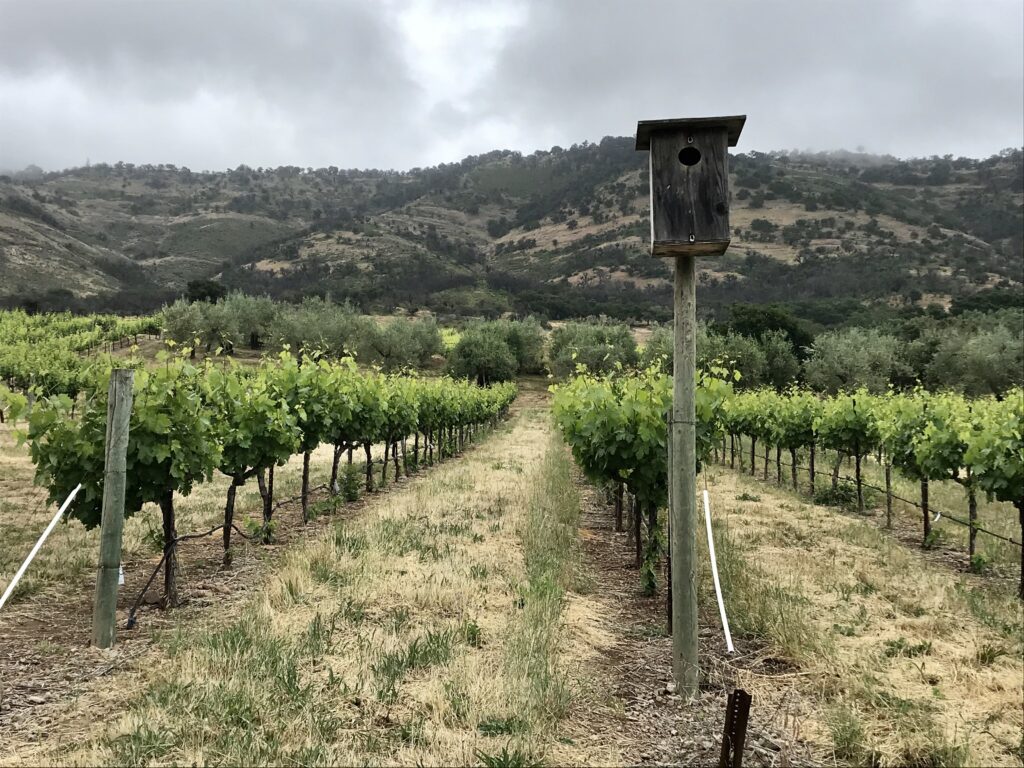
Working in Napa, researchers from California State Polytechnic University, Humboldt have shown that the barn owls can effectively control the numbers of rodent pests in vineyards. But it’s not just a matter of direct predation. In a study recently published in the journal Ecological Applications, Humboldt professor Matthew Johnson, graduate student Katherine Larson, and UC Davis extension specialist Roger Baldwin have shown experimentally that vineyard-nesting owls, like wolves or lions, can create a “landscape of fear,” reducing the amount of time nervous rodents spend girdling grapevines or chewing their roots. (The paper originated as Larson’s master’s thesis.)
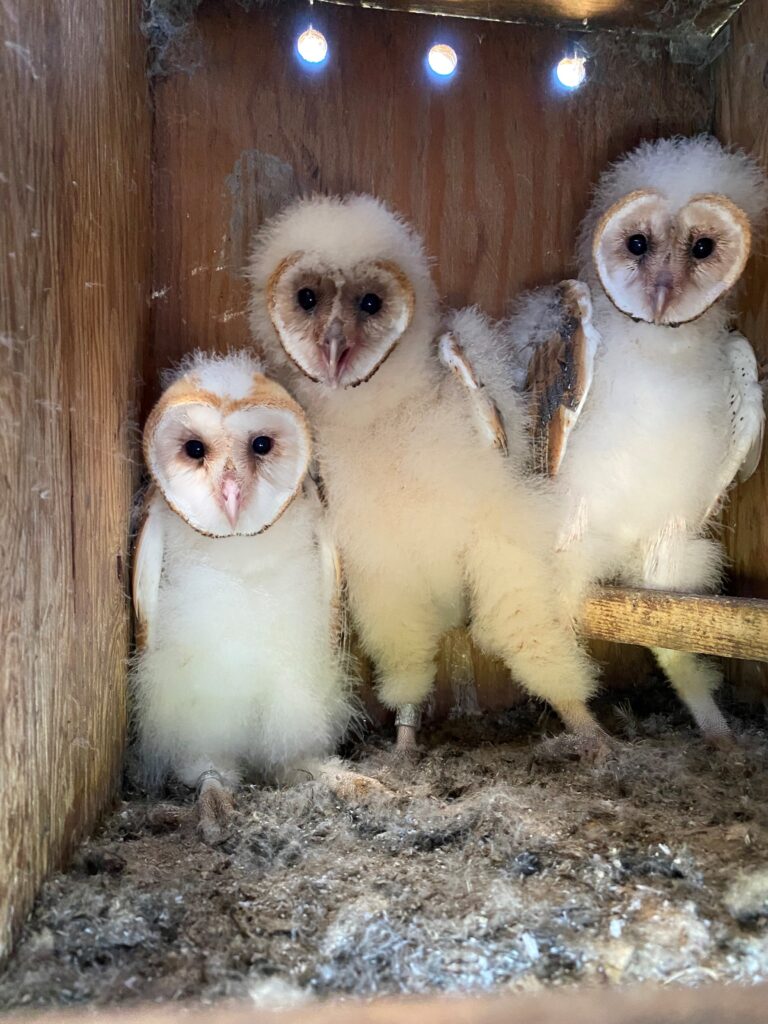
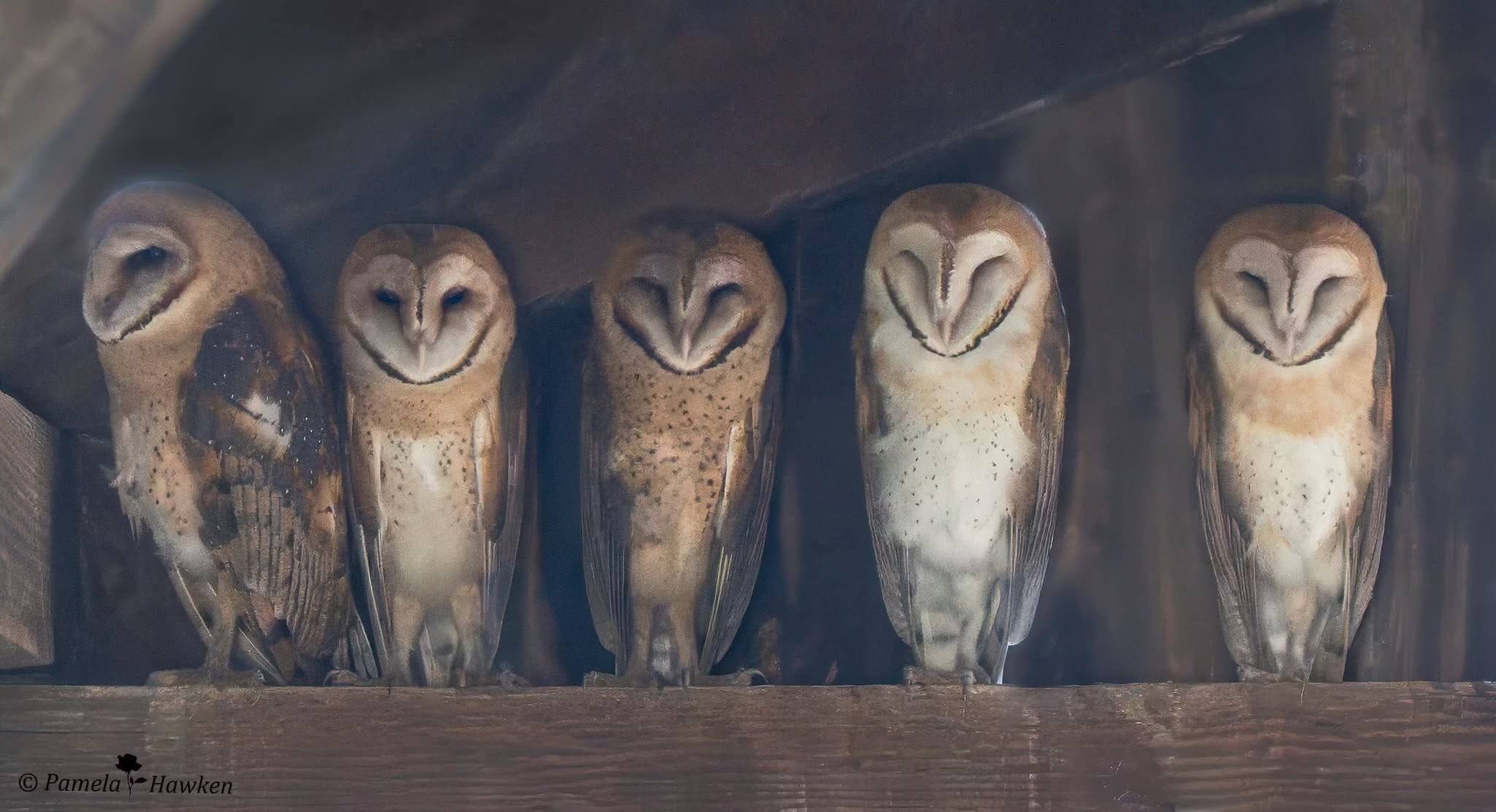
Vineyard operators are well aware that barn owls exert heavy predation pressure on Botta’s pocket gophers, California voles, and deer mice. In 2017-18, Johnson and Dane St. George monitored 29 owl nest boxes in Napa vineyards that produced an average of 3.62 fledglings per box. With an average of 191 rodents delivered per fledged chick over a ten-week period, they calculated that parent owls can feed 1,001 rodents to their offspring in a single successful nesting cycle, not counting those eaten by the parents themselves or fed to chicks that die before fledging. Barn owls sometimes raise two broods per year, occasionally even three. Comparing vineyards with and without owl boxes, Johnson and Ashley Hansen reported that gopher activity declined during the owls’ 2020 breeding season where boxes were present but increased slightly in box-less vineyards.
“We had intended the second study to be a contrast between vineyards with and without boxes,” Johnson recalls. “But we found that vineyards without boxes had neighbors with boxes.” So the researchers created grids based on the location of boxes and the number of owls using them. They worked in vineyards in the southern valley’s Carneros region (Chardonnays and Pinot Noirs) and the mid-valley Yountville and Oakville regions (Cabernets and more.) Field conditions were sometimes challenging: in her thesis, Larson mentions “swimming through flooded vineyards” to collect data in the wet winter of 2023.

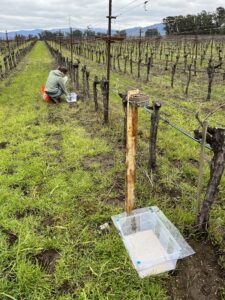
The team used three different survey methods to measure rodent numbers and behavior. Cameras captured activity, mostly images of deer mice. Tooth marks in chew blocks—small cubes of wax and seeds—provided an index of rodent abundance. To quantify perceived predation risk, the researchers deployed giving-up disks (GUDs), trays of sand mixed with seeds. Previous field work had established that foraging rodents stop foraging sooner and leave more seeds in the trays in risky environments. The grids were sampled in February and March, at the beginning of the barn owls’ nesting season, and again in May and June when predation pressure was highest.
The results: within a range of low to high predation pressure, the presence of barn owls was associated with a 38 to 52 percent reduction in rodent activity and a 16 to 38 percent increase in perceived predation risk. The owls weren’t just killing rodents; they also appeared to be limiting the amount of time the rodents spent in the vineyards. Other factors found to influence rodent behavior were wind, moonlight, and, significantly for growers, vegetation on the ground, which was associated with higher perceived predation risk.
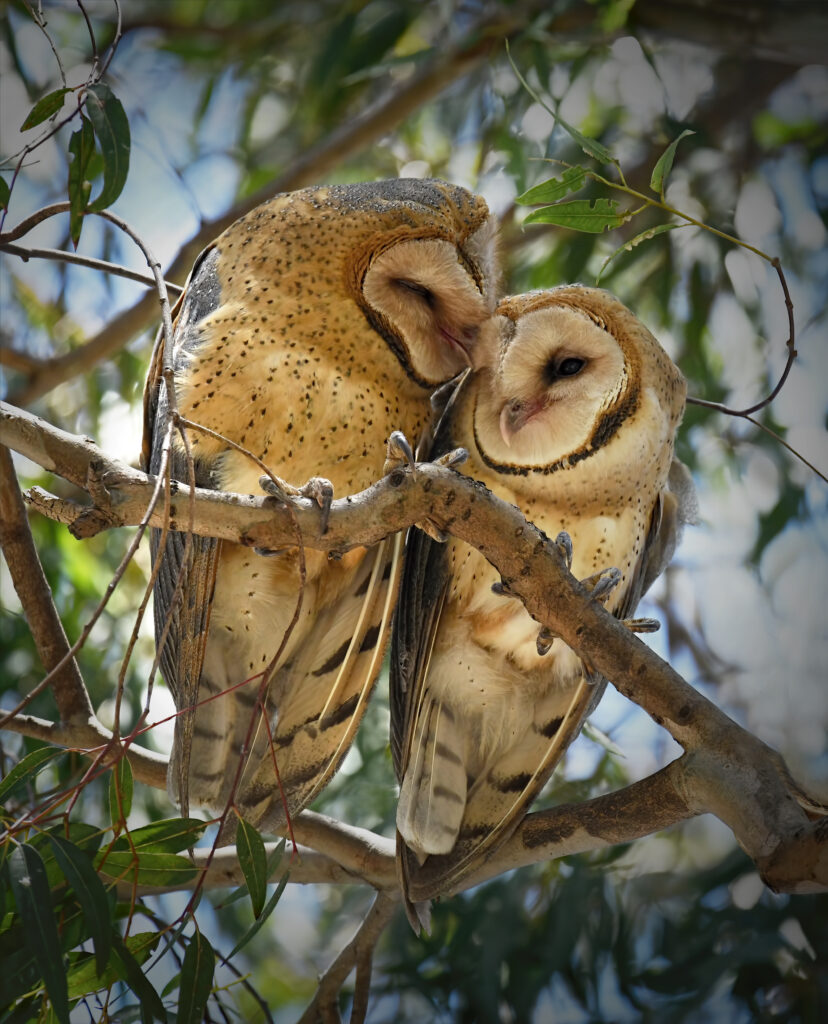
Most Napa vineyard operators sow cover crops (favas and other legumes, radishes, grains) between rows of vines. “Many sow a range of plants including nitrogen-fixers, then till them into the soil,” Johnson explains. “Others are experimenting with permanent cover crops that they don’t till.” In addition to improving soil health, storing carbon, and allowing less water use, cover crops and vineyard trimmings create an environment that favors the owls, whose extraordinary ears can detect the squeaks and rustlings of invisible prey, over visually-oriented rodents. Barn owls’ long legs help them punch through thick litter to grab their prey, and rodents seem to be aware of this. Johnson and his co-authors recommend that growers maintain the vine canopy of leaves, pruned twigs on the ground, and vegetation in a cover crop row to elevate perceived predation risk in rodents.
That message is being shared with the vineyard community. “We do a lot of outreach, working closely with Wild Farm Alliance, a nexus between researchers and farmers,” says Johnson. “We’ve done multiple field days in Napa and recently one in Lodi.” Most growers have been receptive; thousands of owl boxes have been installed in Napa vineyards alone. “The main barriers are cost and knowledge,” he adds.
The researchers strongly discourage growers from using anticoagulant rodenticides (ARs) alongside owl boxes: poisoning your rodent-control partners is a really bad idea.
See also:
- Ecology of Fear (2019, Canada), by Liana Y. Zanette and Michael Clinchy, Department of Biology, Western University, London, Ontario