
by Joe Eaton
(Full article from RATS Tales August 2026)
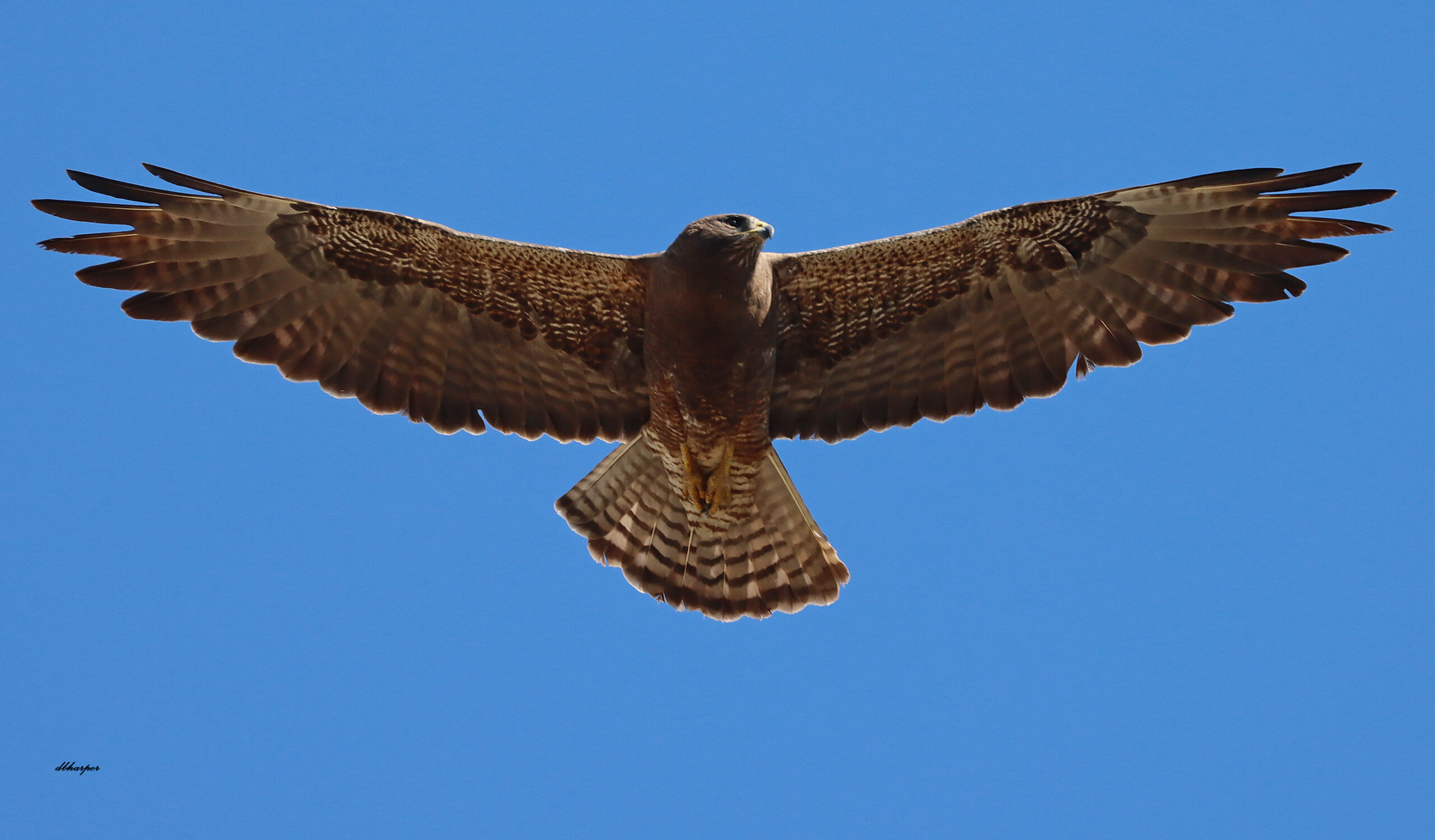
The Swainson’s hawk is a tenacious bird. Its population in California has adapted to the loss of historic grassland and riparian habitat in the Central Valley, survived the hazards of long-distance migration and persecution as a presumed chicken thief, and rebuilt from a nadir of fewer than 400 pairs as of 1979. Now developers are gunning for it.
In June, a trade group called the California Building Industry Association (CBIA) petitioned the California Department of Fish and Wildlife (CDFW) to remove the hawk from its protected status under the California Endangered Species Act (CESA). The petitioner uses a recent population estimate to argue that the Swainson’s hawk has exceeded a historic baseline and should be considered fully recovered. Delisting would remove a perceived obstacle to housing construction in the Sacramento Valley, the Sacramento-San Joaquin Delta, and elsewhere. But biologists who know the species well, including the originator of the baseline estimate, say such a move would be premature.
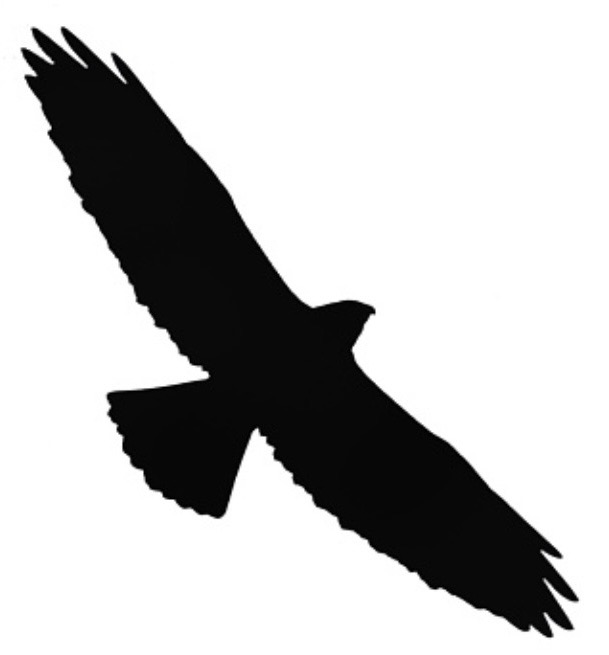
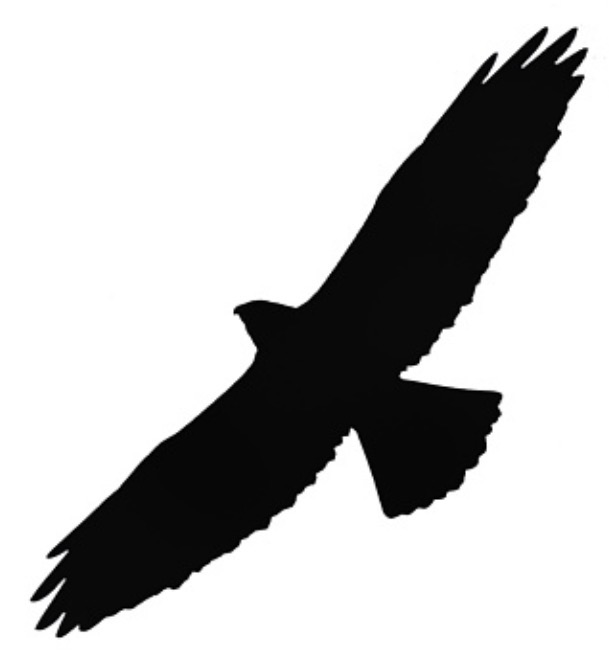
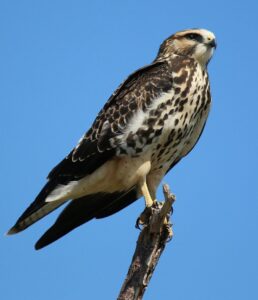
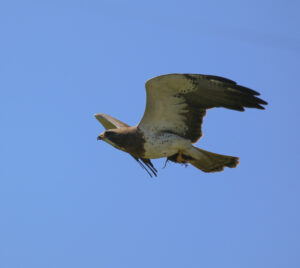
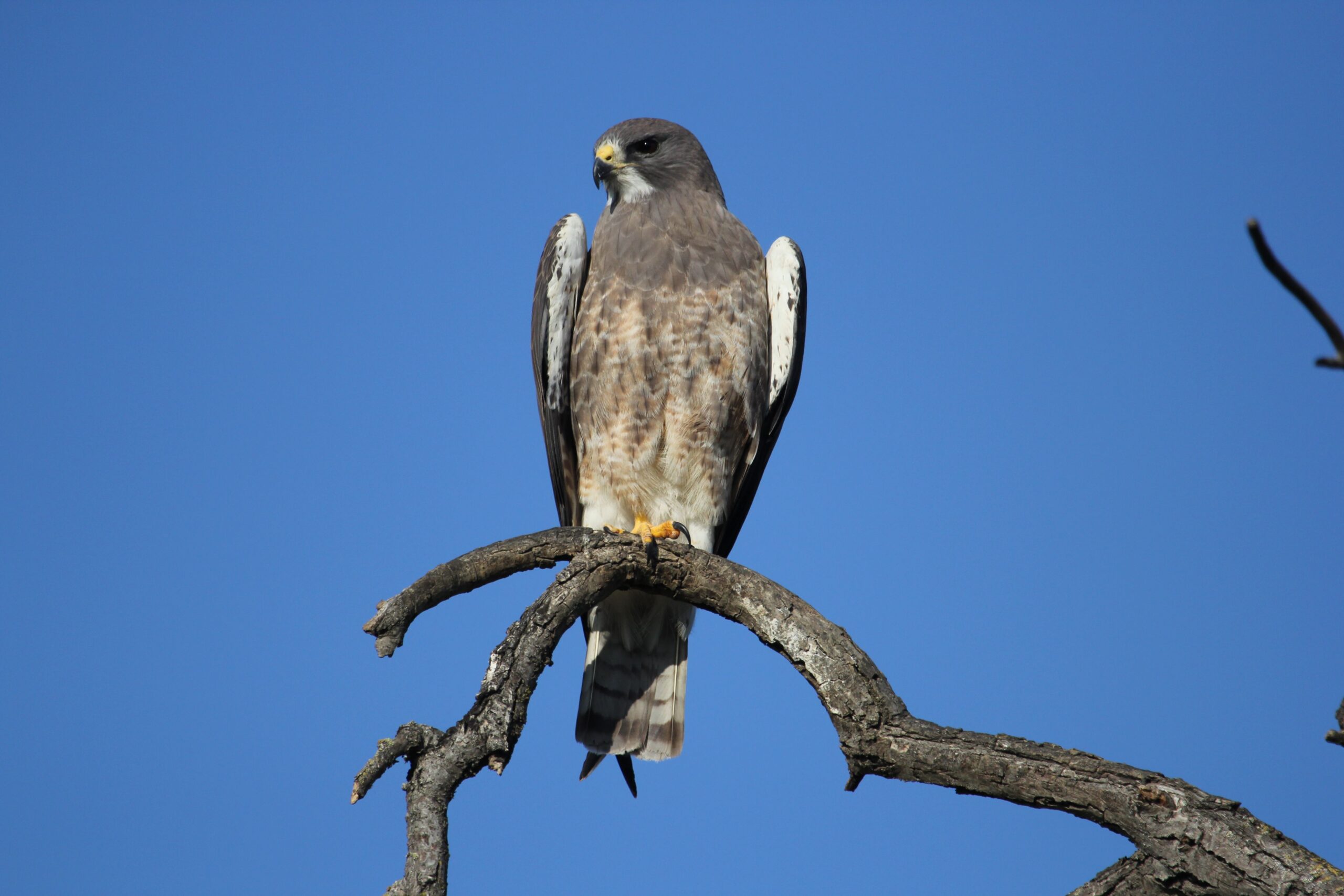
If you’ve spent time in California’s Central Valley in spring or summer, even just driving I-80 or I-5, you’ve probably seen a Swainson’s hawk. It’s a mid-sized raptor, about the size of a red-tailed hawk but with a subtly different flight profile: narrower and more pointed wings tipped up while soaring or bent at the wrist while gliding, longer tail. Like red-tails, Swainson’s have multiple color morphs. Adult light morph birds have brown chests and white bellies, intermediates have rufous bellies, dark morphs are uniformly dark brown. All have gray tails. They don’t seem to be as vocal as red-tails; field guide author Ted Floyd describes their call as an “anguished squeal.”
Up to 90 percent of California’s Swainson’s hawks nest in the Central Valley, the remainder in the Great Basin corner of the state, the valleys east of the Sierra Nevada, and the Transverse Ranges. They prefer open country with sizable trees for nesting (cottonwoods, oaks, junipers, even Joshua trees) and grassland or agricultural fields for hunting. Throuples have been reported, with a female and two males tending the nest. Smaller birds—shrikes, orioles, kingbirds, finches—sometimes make their homes under or in a Swainson’s nest, presumably to avoid predation.
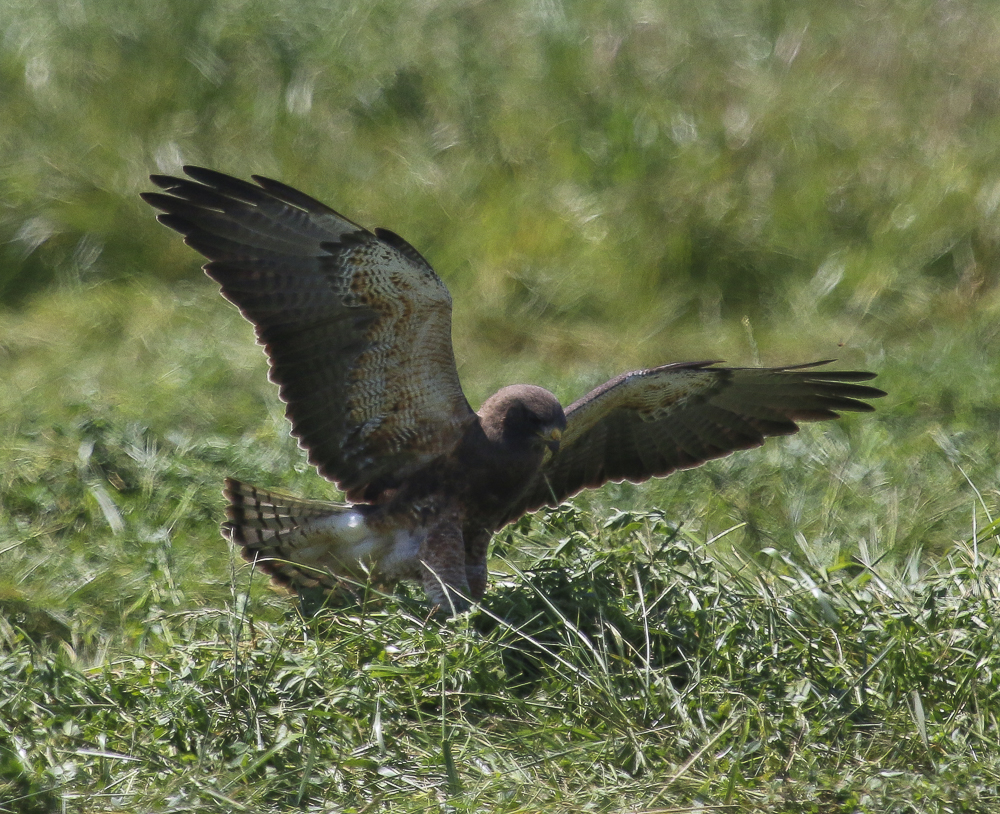
During the breeding season Swainson’s prey on voles, ground squirrels, pocket gophers, and other rodents. Post-breeding, the hawks subsist largely on insects, often hunting grasshoppers and caterpillars on foot. Because of their rodent and insect diet, Swainson’s were considered “good” hawks, “the farmer’s friend.” They also take the occasional small bird, snake, or frog. They’re drawn to fires, floods, and farm operations that flush out prey. Although sometimes characterized as lazy or sluggish, the hawks are agile enough to snag dragonflies and bats in flight.
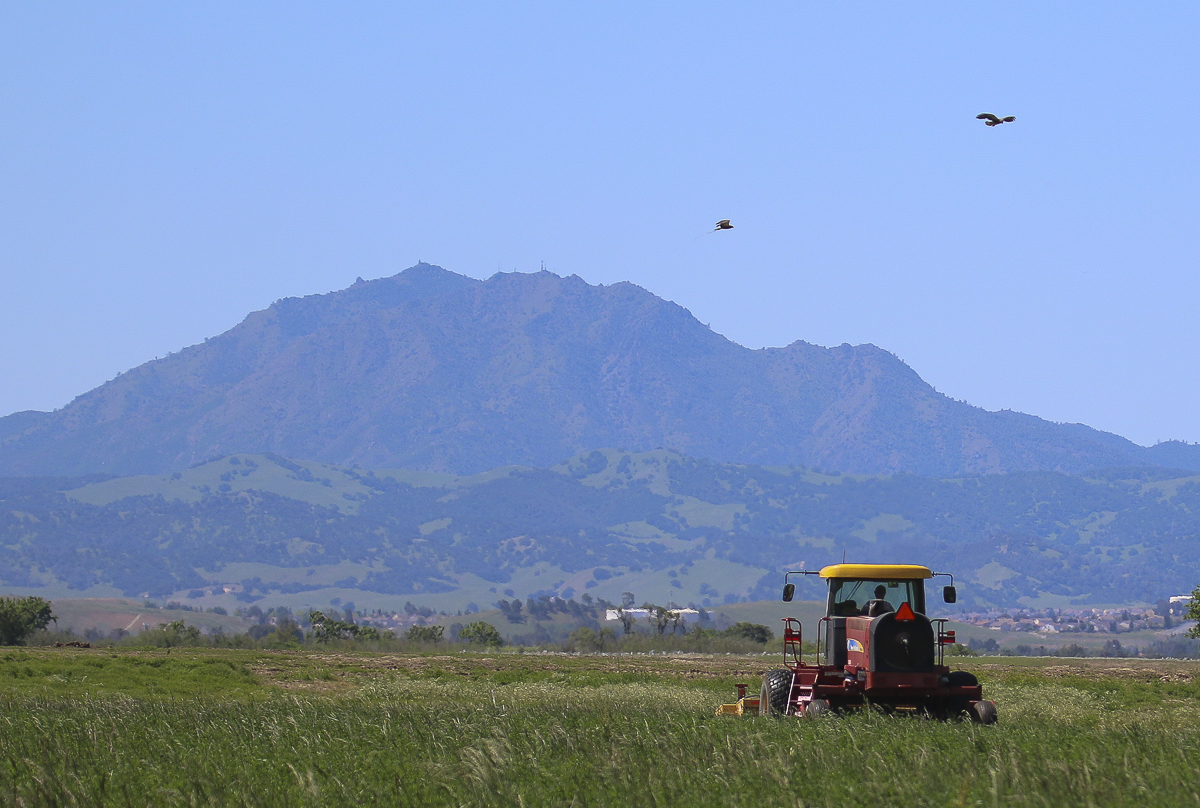
It was once thought that California Swainson’s hawks migrated to the pampas of Argentina like their kin in the Great Plains and Great Basin, joining the enormous river of raptors that passes over Mexico every fall. Although some California birds do go to Argentina, recent radiotelemetry data show that hawks that bred in the Natomas Basin near Sacramento traveled to a string of wintering spots in western Mexico, Central America, Colombia, Venezuela, and Bolivia. Taxonomists say their closest relative is the Galapagos hawk, possibly descended from off-course migrating Swainson’s hawks. Genetic studies indicate that Central Valley Swainson’s have a distinctive profile, despite gene flow between Valley and Great Basin populations. The proportion of dark-morph birds also seems to be higher in the Valley than elsewhere.
Outside the Central Valley and the Great Basin, the Swainson’s hawk has lost a lot of ground in California. Older references document nesting along the central and southern coast, from Salinas to San Diego. In their 1944 monograph The Distribution of The Birds in California, Joseph Grinnell and Alden Miller wrote that the species was “formerly abundant, but now (1943) greatly reduced in numbers and in extent of breeding range, as result of human influences.” The hawks have never returned to the coast, and their Valley habitat has been fragmented by urban sprawl, vineyards, and orchards. The genomes of Central Valley hawks carry the signature of population bottlenecks within the last two centuries. Populations in southeastern Oregon and western Nevada also decreased.
What drove the decline remains a matter of conjecture. Grinnell and Miller fingered “human influences,” and habitat loss was almost certainly involved. Jim Estep, who has studied the species for 40 years for the CDFW and as an environmental consultant, suspects the conversion of Valley grasslands to agriculture may have triggered the decline: “We think of the bird as adaptable to agricultural communities. But that conversion changed habitat suitability and the prey base.” There may have been a lag before the hawks started hunting voles in alfalfa fields. Urban development in southern California could have contributed, but that wouldn’t explain the abandonment of prime real estate like Camp Pendleton and Tejon Ranch. DDT wasn’t widely used in the US until after World War II, and studies in the 1980s found no evidence of eggshell thinning or residues in the shells. The timing of the decline would also argue against anticoagulant rodenticides (ARs).
Conditions in the hawk’s migration stopovers or wintering grounds may have had an impact. In 1995 and 1996, an estimated 20,000 Swainson’s hawks were killed by organophosphate insecticides used to control grasshoppers in alfalfa and sunflower fields in Argentina. Some survivors may have come home with a toxic burden: a study reported decreased survival and reproductive success of migrant hawks that returned from Argentina to nest in Butte Valley after the mass poisoning episodes. Apart from Argentina, there’s little or no information about diet or pesticide use along the species’ migration corridor or in other wintering locations.
Observers like the late Guy McCaskie were aware that Swainson’s hawks were becoming scarce in their remaining habitat by the 1970s. Working for what was then the California Department of Fish and Game and the federal Bureau of Land Management, biologist Peter Bloom carried out a statewide census in 1979. After a four-month solo effort, he concluded that the species was down to 375 breeding pairs.
To establish an historic population baseline, Bloom relied heavily on the egg collection of the Western Foundation of Vertebrate Zoology in Camarillo. Most of the Swainson’s eggs came from areas of Southern California where the hawks no longer nested. “Some might call my methods primitive,” he says. He found the highest contemporary population density in the Klamath Basin and used that to derive maximum and minimum estimates of the historic number of breeding pairs in what was suitable nesting habitat at the time. That gave him a range of between 4,284 and 17,136 breeding pairs. From the lower estimate, he calculated a 91 percent decline. In his 1980 report, Bloom noted that the actual size was probably between the two numbers.
Based on Bloom’s work, the Swainson’s hawk was listed as threatened under the California Endangered Species Act in 1983. The species isn’t protected by the federal Endangered Species Act, and the Valley birds aren’t officially recognized as a distinctive population segment or evolutionarily significant unit. The state never established a recovery plan for the hawk. “The bald eagle and peregrine falcon got a lot of help, including captive breeding programs,” Bloom observes. “The Swainson’s hawk did it on its own.” In retrospect, Estep says crafting a statewide plan would have been difficult: “The species occupies a good variety of areas with a lot of diversity, mostly privately held lands. It’s different from a species in a clearly defined natural community, like the salt marsh harvest mouse.” Regional and county-level conservation plans, and the efforts of the nonprofit Friends of the Swainson’s Hawk (FOSH) filled some of the gap, and may have enabled a significant rebound.
CDFW surveys in 2005 and 2006 yielded a statewide estimate of 3,218 breeding pairs, as reported by Carrie Battistone and other agency biologists in a 2019 Journal of Raptor Research article. Breeding Bird Survey data shows a statewide population increase of five percent per year between 1966 and 2019. On a local scale, breeding bird atlasers in Sacramento County reported confirmed nesting in 32 [atlas] blocks in 1988-93 and 39 in a second effort in 2016-20, as well as a range expansion into the northern part of the county. Swainson’s hawks have also been found nesting in the Valley cities of Davis, Stockton, and Turlock, where they seem to prefer mature conifers in older neighborhoods. However, urban nesters have lower reproductive success than their rural kin.
The results of the most recent CDFW surveys, in 2016 and 2018, were reported in a 2022 article in the journal Ornithological Applications, co-authored by Brett Furnas and four other CDFW biologists along with Bloom. The authors used population modeling to come up with a dramatically higher estimate. Based on those surveys, plus the 2005-6 statewide surveys, several regional surveys, and eBird reports, they estimated 18,810 breeding pairs and an annual population increase of 13.9 percent from 2005 to 2018.
If they’re accurate, those numbers are welcome news. But the authors make it clear that the Swainson’s hawk isn’t in the clear yet: “[W]e recommend caution with respect to conservation planning for the species in the state. The stability of the recovery is unclear.” Concerns include the expansion of orchards, which are inadequate nesting and foraging habitat, and “urban and energy development, diminishing grasslands, pesticide poisoning, and climate change.” Energy development would include large-scale solar. There are potential double whammies: climate change may lead farmers to change crop types. They weren’t prescient enough to foresee the AI boom, which could fill the Central Valley with data centers.
The 18,810-pair estimate was seized on by the CBIA as a basis for delisting the Swainson’s hawk: if its population has exceeded Bloom’s baseline estimate of 17,136 historically breeding pairs, listing is no longer warranted. To quote the petition’s executive summary: “The population of Swainson’s hawk in this state has rebounded to pre-historic [sic] levels, and the species is no longer under threat.” So it can’t be allowed to stand in the way of urban sprawl: “Regulatory burdens associated with threatened and endangered species listings, including extensive biological review requirements, habitat mitigation obligations, land-use restrictions, permitting delays, and litigation exposure, substantially increase the cost and uncertainty of housing production.” Delisting the hawk would reduce those “burdens.”
But the petitioner’s math is dubious: the 17,136-pair figure was the high end of the range calculated by Bloom, who thinks the actual numbers were somewhere between the two extremes. The CBIA’s petition, ostensibly written by its CEO and president Dan Dunmoyer, is full of cherry-picked data, specious logic, and outright misstatements of fact.
Among the latter: “Since the [CDFW] five-year review in 2016, California has enacted strict laws, notably AB 2552, banning nearly all uses and sales of first-generation (e.g., chlorophacinone, warfarin) and second-generation (e.g., brodifacoum, bromadiolone) anticoagulant rodenticides (ARs) which became effective January 1, 2025….given California’s new laws, anticoagulant rodenticides do not represent an ongoing threat to the California breeding population of Swainson’s hawks.” This is blatantly untrue. Exemptions for agricultural use in AB 2522 and previous acts allow the continuing deployment of ARs in the crop fields where the hawks hunt rodents during their breeding season. Several cases of exposure to ARs in California Swainson’s and at least one death definitely due to AR poisoning have been reported.
Bloom says he wasn’t involved in the population modeling for the 2022 paper, and Furnas hasn’t responded to email requesting an explanation of the other authors’ methods. Without claiming personal expertise in statistics or modeling, a review of the article raises several warning flags. It’s not clear how the data sets from the state surveys, local/regional surveys, and eBird reports were integrated. A comment that the 2005-06 surveys “were characterized by a higher level of surveyor skill” than the 2016 and 2018 surveys isn’t elaborated on, and the authors acknowledge that they may have overestimated the Swainson’s hawk population by as much as ten percent. None of this inspires a great deal of confidence.
While accepting that his co-authors “knew what they were doing,” Bloom feels strongly that delisting the Swainson’s hawk would be premature. “A third of their historic range is either not occupied or we just don’t know,” he says. “Just because the numbers look good but a third of the range is vacant doesn’t suggest we have a healthy population yet.” He calls for research “to answer some of the ecological questions” and new surveys, especially in the Coast Range.
Furnas and his co-authors describe their estimates as robust, but others disagree. Mike Bradbury, a retired Department of Water Resources biologist with extensive experience with the Swainson’s hawk, considers the 2005-06 survey “probably the only accurate count we have in the state.” Battistone and her co-authors “didn’t do modeling. They did extrapolation of actual data points….We don’t really know what the current population in the state is. You certainly can’t base it on the 2022 paper. We’d need an effort similar to 2005-06. To my knowledge there’s never been a population viability analysis. We don’t know what a healthy population would look like.”
“There’s no question that the Swainson’s hawk is increasing,” says Estep. “The question is to what extent.” He agrees with Bradbury that the number from the 2005-06 survey was “probably reasonably accurate.” Summing nesting data from multiple counties yields a total that “corresponds pretty well with what the Battistone paper comes up with.” But he has issues with the more recent estimate: “A model is only as good as the data you put into it. That’s where I think things got out of kilter. The end result is that you look at the numbers and say ‘How can that be?’ How could you have a 350 percent increase in the statewide population over a ten-year period?”
Estep has done long-term studies in Yolo County, home to the state’s densest Swainson’s nesting population, and in the Natomas Basin: “We have actual census data from those areas. We’ve monitored every year, checked every tree.” The trends—a 33 percent increase from 2007 to 2020 in Yolo, a 56 percent increase from 2007 to 2018 in Natomas “are really encouraging. But you can’t extrapolate that out.” For whatever reason, the Furnas study didn’t use available ground-truthed data for the years between 2005-06 and 2015-16.
Allen Fish, RATS co-founder and science advisor, is also dubious about delisting. He points out that southern California populations have still not recovered. Threats to migrants and wintering hawks are still present: “The spectre of another massive kill…in Mexico, Central or South America is as real as it ever has been. Add to that the current degradation of US environmental regulations. This is not a time to put the California population at risk.”
Fish points out that insecticide use has diminished a major prey source for the species, and ARs could result in secondary poisoning: “Given Swainson’s feeding and nesting all over California agriculture, we can assume they are in contact with SGARs. That should be studied prior to delisting.” There’s also avian influenza, which has hammered the peregrine falcon and other raptors. Finally, Fish concurs that more survey data is needed: “The bottom line is that the Central California population has had occasional and spotty population tracking since 1980, and should not be delisted until at least two thorough statewide surveys paired five or ten years apart can establish that delisting has no risk to that population.”
There are no precedents for what the CBIA requests. According to Jeff Miller of the Center for Biological Diversity, the only species removed from CESA protection to date were the brown pelican and peregrine falcon, whose recovery was unequivocal; the Tecoma pupfish and thicktail chub, which had gone extinct; and eight plant species which were delisted because of taxonomic changes.
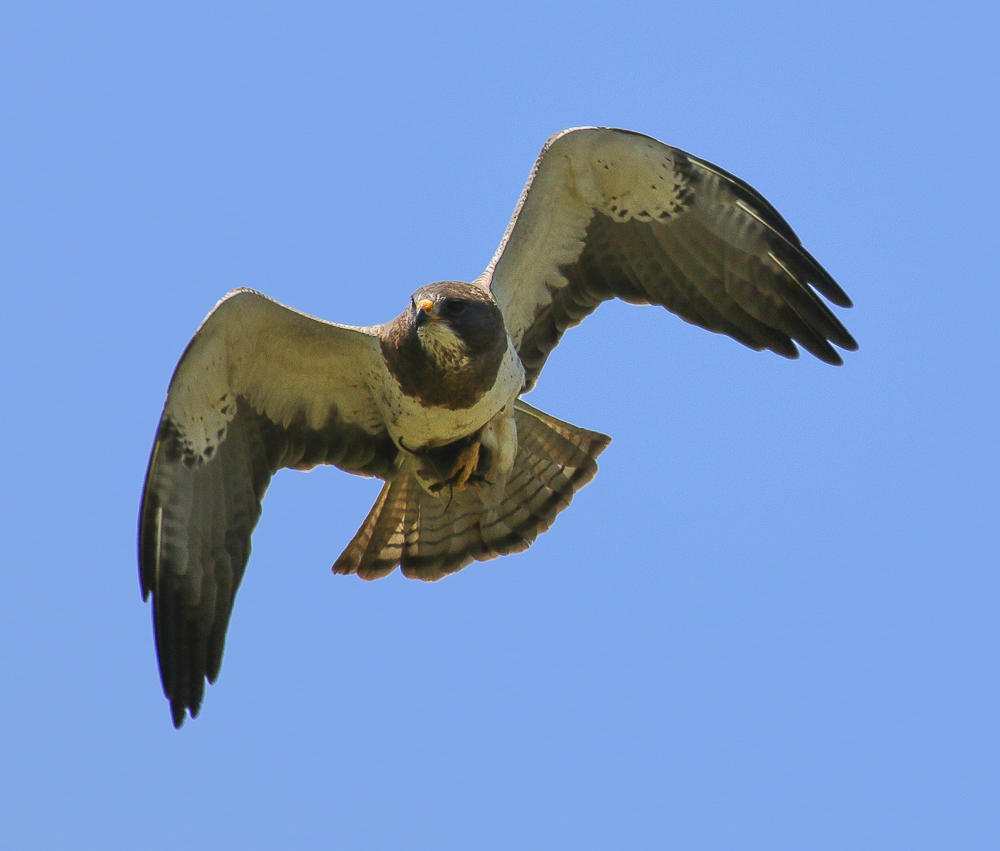
Who would benefit from delisting the Swainson’s hawk? The builders behind the projected California Forever “model city” in southeastern Solano County, for one. Their land company has purchased parcels in four breeding bird atlas blocks where nesting was confirmed and others rated as probable or possible based on surveys from 2005 to 2010.
Swainson’s habitat in the Natomas Basin on the west side of Sacramento is another target. Part of their local range with a high concentration of nests is protected as a Swainson’s Hawk Zone. “State, federal, City of Sacramento, and Sutter County recognize the Zone and agree not to develop there,” explains a spokesperson for FOSH; the federal and state governments can’t issue permits for development in the Zone. But nearby foraging habitat is at risk.
Several development projects have been proposed for Natomas land now zoned as agricultural, including the Upper Westside, Airport South Industrial, Grandpark, and WattEV projects. At the behest of Supervisor Phil Serna, who has close ties to developers, the Sacramento County Board of Supervisors greenlighted the Upper Westside plan in July. FOSH, the Garden County Community Association, and the Environmental Council of Sacramento (the latter led by former Sacramento mayor Heather Fargo) promptly sued to block the project.
Under the CESA, CDFW has 90 days to review the petition and evaluate whether delisting is warranted. Their recommendation goes to the California Fish and Game Commission (CFGC), which will then schedule public hearings. The Commission may decide whether to accept the petition for consideration as soon as October. If it’s accepted, CDFW is required to review the status of the species within 12 months. Their report will be up for public comment for 30 days. A second round of public hearings will follow before the CFGC makes its final decision.
Miller, a longtime observer of the listing process, believes the petition is unlikely to get that far: “The California Building Industry petition is a bunch of self-serving nonsense that will not stand up to scientific scrutiny. If the CFGC accepts the petition for review, I expect CDFW will tell them it is not warranted.” It remains to be seen whether the petitioner’s playing the housing card will outweigh the lack of credible supporting scientific data.